
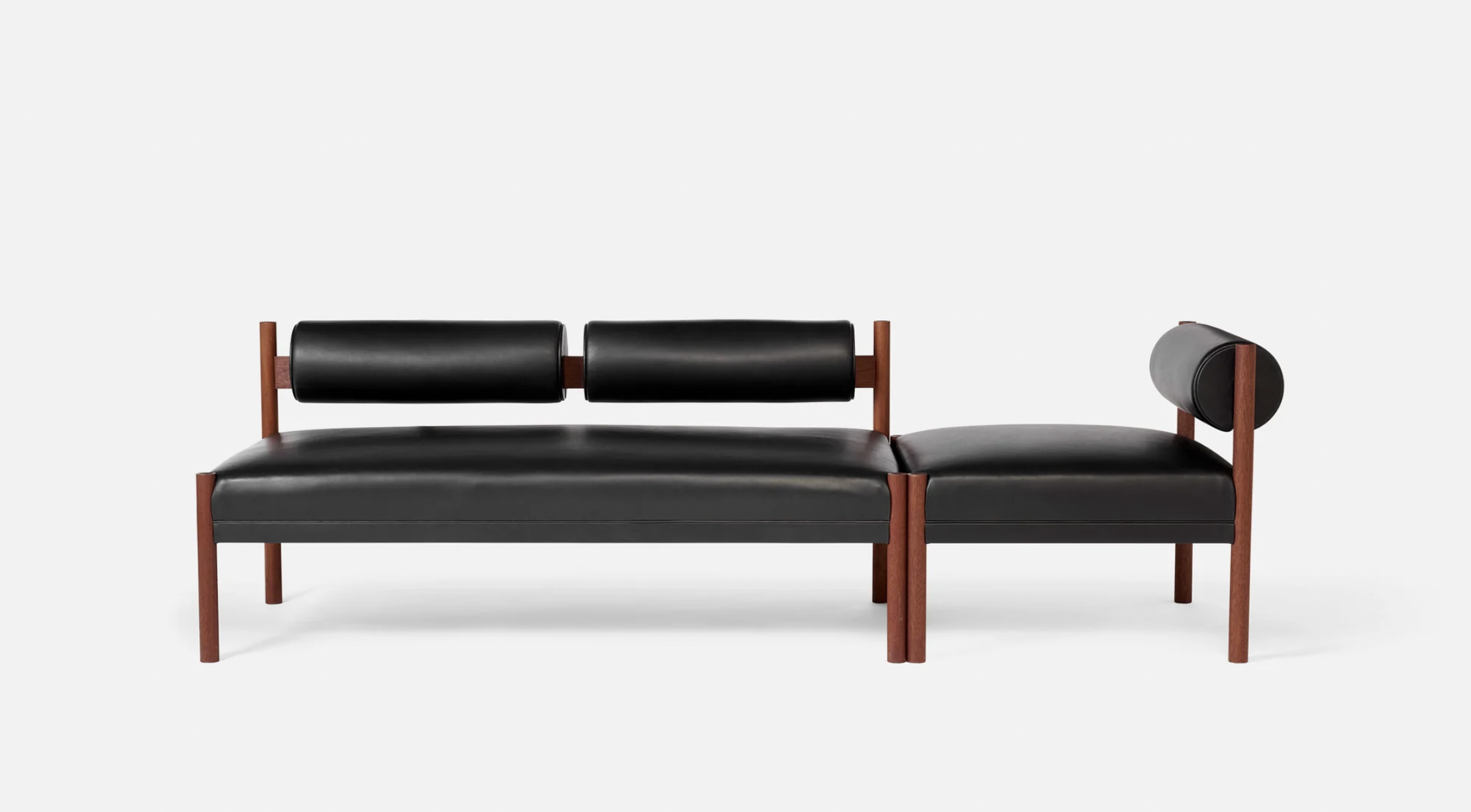
A. Petersen: Heritage Brand Acquisition Case Study
As part of the Lucaz Re:born (working title) strategy, Lucaz Design identifies small, design-led companies with in-house production capabilities and focused catalogues as potential acquisition targets — particularly those rooted in craft traditions but positioned at an inflection point structurally or financially.
A relevant public example is the Danish company A. Petersen, founded in 2014 with the ambition of renewing Danish design culture through contemporary production, collaborative development, and durable materials.
The company developed:
– A refined seating and storage catalogue
– A hybrid model combining gallery, manufacturing, and design incubation
– Close collaboration with established Danish designers
– Denmark-based prototyping and local craft production
Its portfolio included work by Dan Svarth, Chris L. Halstrøm, Line Depping, and Knud Holscher — designers associated with disciplined form and material clarity.
In late 2024, A. Petersen’s original corporate entity entered bankruptcy. A new legal structure was subsequently formed, allowing operations to continue under revised ownership.
Such transitional phases illustrate the type of structural moment Lucaz Re:born monitors:
situations where strong design DNA and production infrastructure exist, but long-term capital structure, strategic positioning, or operational alignment require reconfiguration.
ACQUISITION MODEL (ILLUSTRATIVE)
In a comparable scenario, Lucaz Re:born could pursue:
– Full or majority brand acquisition, including catalogue rights and production assets
– Structured rights review and contractual consolidation
– Archive audit to identify pieces aligned with Lucaz standards
– Strategic discontinuation of non-aligned products
– Material and technical recalibration of selected works
– Relaunch under the Lucaz Re:born line with clear editorial positioning
– Integration into Lucaz Design’s European production framework
The objective would not be expansion through volume, but consolidation through selectivity.
STRATEGIC LOGIC
This case illustrates a broader acquisition thesis:
– Identify design-rich but structurally transitional brands
– Secure rights and production capabilities at rational valuations
– Preserve structural strengths
– Reposition through disciplined editorial control
– Integrate into a scalable production system
This approach enables Lucaz Re:born to acquire:
– Existing production infrastructure
– Recognisable design catalogues
– Established material competence
– Embedded brand equity
Without assuming legacy cost structures or inherited inefficiencies.
POSITION WITHIN LUCAZ DESIGN
Any acquired brand or archive would not operate as a separate identity.
Selected works would be edited and presented within Lucaz Re:born under the Lucaz Design umbrella — maintaining historical reference where relevant, but aligned with the studio’s material and production standards.
STRATEGIC IMPLICATION
This model demonstrates how Lucaz Re:born can secure high-quality design IP and production capability at scale — strategically, not speculatively.
The objective is not nostalgia.
It is structured consolidation of under-leveraged design value.