

Financials & Forecast
Lucaz approaches its financial strategy with discipline and operational realism. The objective is to build a structurally profitable design house through controlled growth, defined margins, and repeatable production systems.
The focus is not hyper growth, but measurable progression toward sustainable annual turnover.
COST MODEL & PRICING STRATEGY
Production costs remain variable at this stage, as supplier negotiations, technical testing, and prototyping are ongoing across selected workshops in Portugal, France, Italy, and the United Kingdom.
In the absence of fixed unit costs, pricing has been benchmarked against comparable high-end European and US design studios operating within:
– Low-volume production
– Specialised material sourcing
– Architecturally integrated product categories
This benchmarking enables:
– Premium positioning aligned with market expectations
– Gross margin protection at scale
– Long-term pricing stability
Final unit economics will be confirmed following prototype validation and supplier contracts.
Indicative retail ranges per typology are detailed in Appendix D.
REVENUE STREAMS
Lucaz operates through three defined revenue channels:
CORE COLLECTION
Primary revenue driver.
Sales via architects, interior designers, developers, galleries, and selective direct clients.
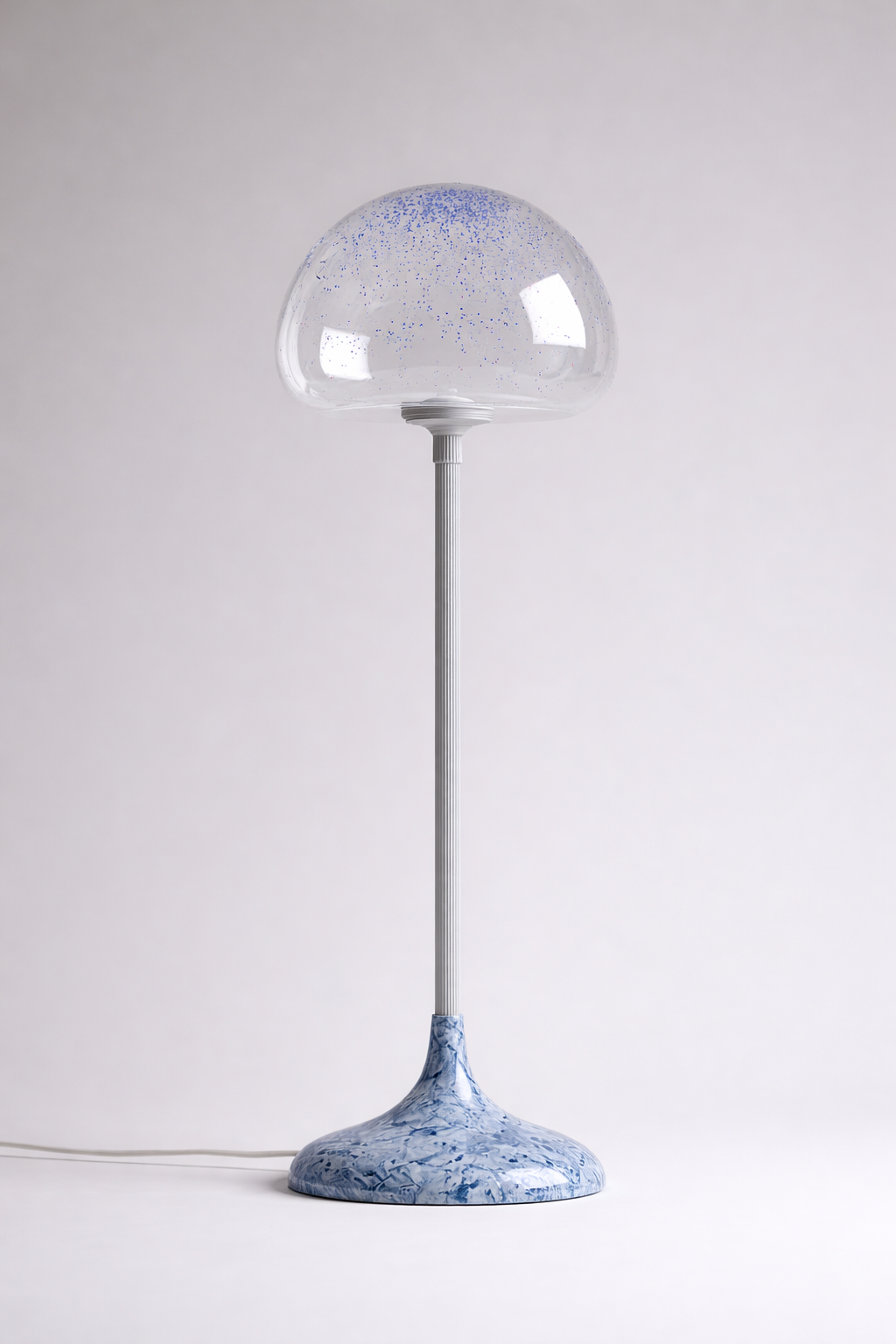
LUCAZ RE:BORN
Higher-margin category driven by acquired or licensed design rights.
Combines IP leverage with lower development cost per SKU once rights are secured.
COMMISSIONS & LIMITED SERIES
Selective, higher-ticket projects with elevated margin and brand visibility impact.
REVENUE TARGETS
Long-term target:
€2 million annual turnover within minimum 4–5 years.
Projected distribution (steady-state model):
– ~60% Core Collection
– ~40% Lucaz Re:born
Lucaz will launch exclusively with the Core Collection, establishing brand identity, trade relationships, and operational stability before introducing the Re:born line.
Re:born is structured as a phase-two expansion strategy, anticipated from Year 2–3 onward, subject to IP acquisition opportunities and capital timing.
This sequencing ensures that original authorship defines the brand foundation before strategic IP-led growth is introduced.
Indicative Annual Sales Volume (steady-state model):
– Core Collection: 400–480 units
– Lucaz Re:born: 130–180 units
– Total: 530–660 units per annum
Core functions as the structural revenue base.
Re:born operates as a margin-enhancing layer introduced once the Core platform is commercially stable.
These projections assume:
– Mid-to-high four-figure average selling prices in lighting
– Higher five-figure pieces within seating and statement furniture
– Balanced typology mix
Full pricing logic is detailed in Appendix D.
DEVELOPMENT PHASING
The financial model follows a staged operational build:
Phase 1 (Months 0–6)
Legal structure, supplier onboarding, technical development.
Phase 2 (Months 6–12)
Prototyping, compliance engineering, Core Collection launch preparation.
Phase 3 (Months 12–18)
Initial Core releases, digital activation, first B2B placements, and evaluation of selective Re:born acquisition opportunities.
Phase 4 (Months 18–24)
Reorders, margin validation, showroom and gallery expansion.
Phase 5 (Months 24–36)
Scaled production capacity and progression toward €1–2 million turnover.
The pre-seed raise is structured to finance the first 24 months of this trajectory.
ECONOMIC PRINCIPLES
The model is built around:
– Made-to-order production (low inventory exposure)
– Controlled SKU expansion
– Gross margin discipline
– IP-backed product value
– B2B-first sales strategy
Capital efficiency is prioritised over speculative scale.
Lucaz is structured for long-term independence rather than exit-driven acceleration. The objective is to build a financially resilient design house capable of sustained profitability across cycles — preserving authorial control while allowing disciplined expansion. Growth is pursued to strengthen stability, not to prepare for short-term divestment.